Why most manufacturing AI pilots stall at POC, and how to design past it
A working demo is not a working deployment. The pilots that cross the gap share three habits, and they are all decided before any model is trained.
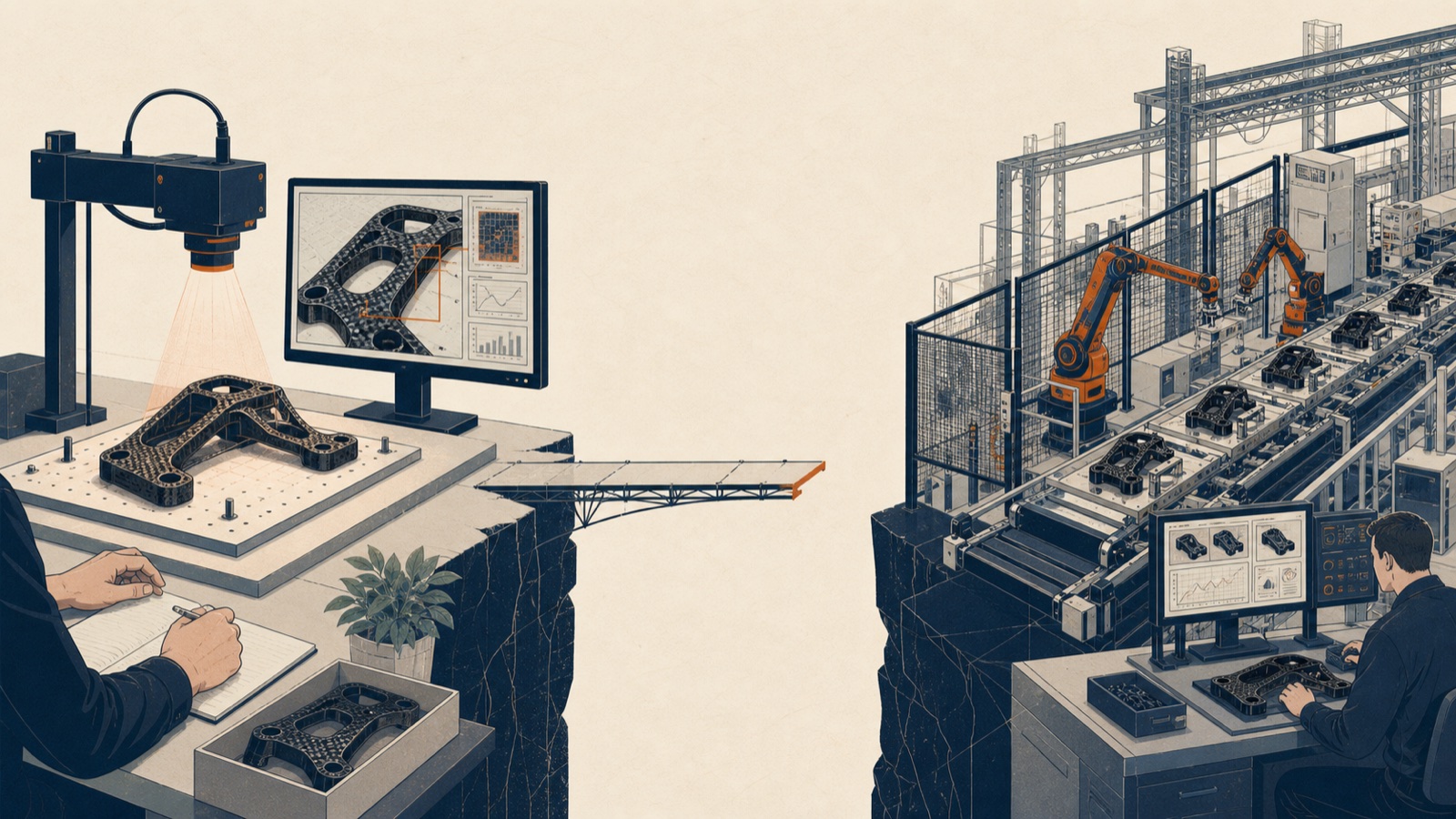
Most manufacturing AI pilots produce an impressive demo and then quietly die. The model hits 95 percent on a slide, the room nods, and six months later nothing has shipped to the floor. The failure is rarely the model. It is the setup around it.
Define success before you train
The pilots that survive write down a measurable target first: which defect, at what recall, compared to which human baseline, judged on which week of real production data. Without that, every result is arguable and the project drifts. A POC is not a science fair. It is a decision test with a pass mark agreed up front.
Start from one expensive problem
Broad platforms stall. The pilots that ship pick the single most expensive recurring problem on one line, and prove value there before touching anything else. Narrow scope is what makes the result believable, and believable is what gets budget for the next step.
The last habit is unglamorous: plan the handoff on day one. Who owns the model when the consultant leaves, where do the labels live, how is drift caught. A pilot designed without an operations owner is a pilot designed to be forgotten. Design the deployment, not the demo, and the gap mostly disappears.
A model score is not an operating result
A pilot can look excellent while answering the wrong question. Accuracy on a curated dataset says little about what happens when a new machine, material batch, operator habit or defect mix appears. Before celebrating a score, ask whether the test data was kept out of training, whether it represents the real line, and whether the errors were counted in the unit the operation actually manages: image, part, batch or customer return.
The operational baseline also matters. If experienced inspectors already catch nearly every critical defect, the system may create value through queue prioritization or consistency rather than replacement. If the real problem is delayed release, measure review lead time. If the real problem is escaped defects, define the defect family and the adjudication process. A useful pilot begins with the costly decision, not the easiest metric to produce.
Design the human decision before the interface
Human-in-the-loop is often written as a reassuring sentence and left undefined. In a real deployment, someone must know which cases the system may pass through, which cases require review, who resolves disagreement, and what happens when confidence is low. Those rules determine staffing, screen design, audit data and response time. They are part of the product, not a policy added later.
The best review screen does not merely display a prediction. It shows the source image or record, the reason for prioritization, the relevant comparison, the model version and the action available to the reviewer. It also captures corrections in a form that can be audited and, when appropriate, reused for evaluation. This turns daily review into a controlled learning loop without allowing the system to retrain or promote itself silently.
Plan the boring parts early
Most deployment failures hide in ordinary details: file naming, barcode matching, machine calibration, missing records, shift ownership, network interruptions and model rollback. A POC team can work around these manually; a production team cannot. Write the operating runbook while the pilot is still small. Name the owner for data exceptions, model changes, incident review and user support before anyone asks for scale.
A practical production gate
Before moving beyond a pilot, require five things: a held-out test tied to the operating decision; a documented human-review path; repeatable data ingestion; monitoring and rollback ownership; and a measurement period that compares the new workflow with an agreed baseline. If one is missing, the work may still be valuable, but it is not yet a verified deployment. Calling the stage honestly makes the next investment decision easier.